Types of windows, and how each one opens
Most window confusion comes down to one question: how does it open? Up and down, side to side, out like a door, or not at all. Get that right for each opening and the rest of the decision gets easy. Here is every style we sell, what it is good at, where it struggles, and what it costs installed.
The quick version
| Style | How it opens | Installed, from |
|---|---|---|
| Double-hung | Both sashes slide up and down, and tilt in | $765 |
| Slider (2-lite) | One sash glides side to side | $771 |
| 3-lite slider | Both end sashes glide, the center is fixed | $2,140 |
| Casement | Hinged at the side, cranks outward like a door | $1,179 |
| Double casement | Two crank-out sashes in one frame | $2,117 |
| Awning | Hinged at the top, the bottom swings out | $1,155 |
| Hopper | Hinged at the bottom, the top tilts in | $818 |
| Picture | It doesn’t. Fixed glass for light and view | $839 |
| Bay and bow | Several windows angled out from the wall | Quoted |
Prices are from our configurator at a typical size for each style: white, standard Low-E glass with argon, professional installation included, per window on an order of five or more. Double-hung, slider and picture prices are the Georgetown Elite series. One or two windows price at 1.5 times, three or four at 1.25 times, and a one-time $195 measure is added per order. Full price breakdown.
Double-hung: the window that opens top and bottom
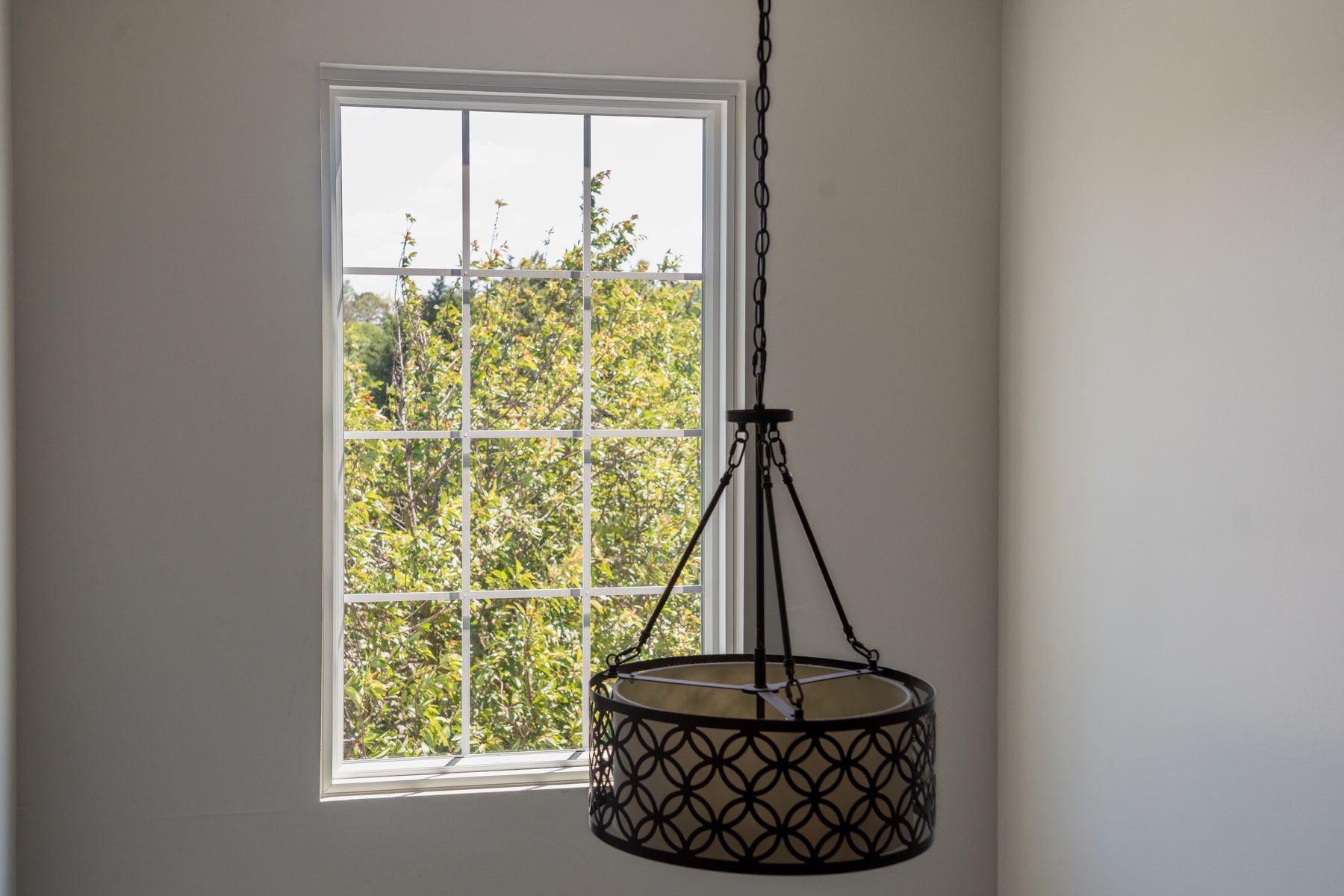
Two sashes, both of which slide up and down. Lower the top one a few inches and raise the bottom one, and hot air leaves through the top while fresh air comes in below. Both sashes tilt in, so you can wash the outside glass from inside the house. It is the most common replacement window in the Mid-Atlantic for good reason.
- Great forTall openings, bedrooms, living rooms, upper floors and traditional houses.
- Watch out forLifting a sash over a deep counter or a bed is awkward. A slider or casement works better there.
Sliders: windows that open side to side
Also called gliders. One sash slides horizontally past the other, so nothing lifts and nothing sticks out. A 2-lite slider has one moving sash and one fixed. A 3-lite slider puts a fixed pane in the middle with a gliding sash at each end, for openings up to about 110 inches wide.
- Great forWide, short openings: basements, ranch homes, and windows behind furniture.
- Watch out forThe bottom track gathers grit, and you only ever get air at one height.
Torn between the two most common styles? Read double-hung vs. slider windows.
Casements: windows that open like doors
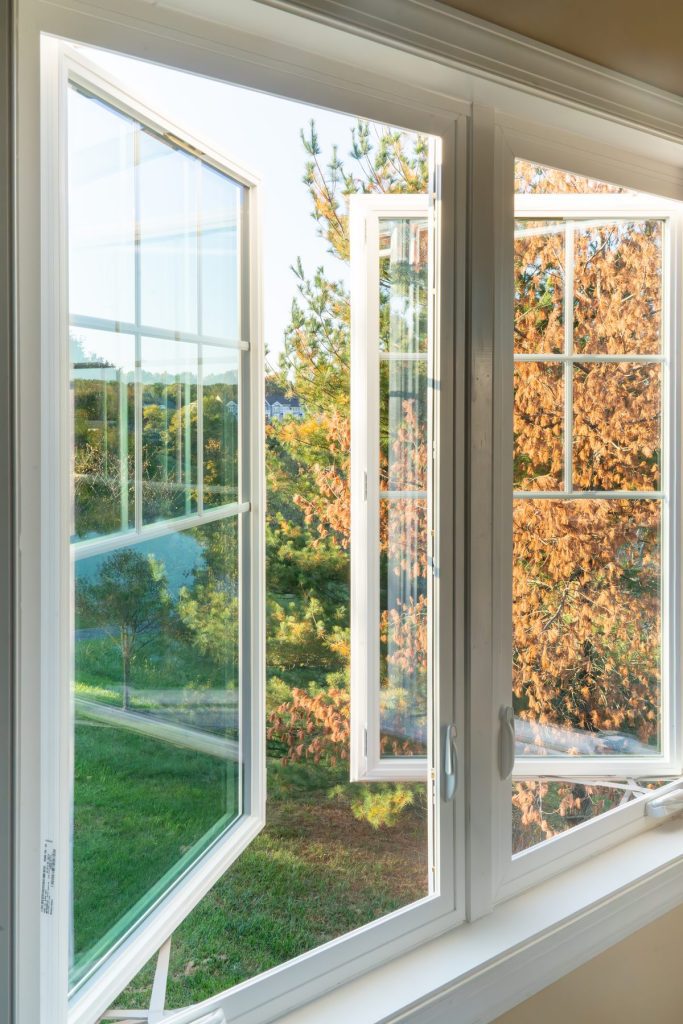
Hinged on one side, a casement swings outward when you turn the crank. The whole sash opens, so it moves more air than any other style of the same size, and a multi-point lock pulls it tight against the frame when you close it, which makes it the best-sealing window we sell. A double casement puts two of them in one frame for a wider opening. Ours are the Vytex 3300 Series, in everything from white to black exteriors and woodgrain interiors.
- Great forOver a kitchen sink, anywhere you want the most fresh air, and bedrooms that need a full egress opening.
- Watch out forThe open sash sticks out, so keep them away from walkways and decks. They also cost more than a double-hung, because the crank and lock are more hardware.
Vytex casements swing out. If you are looking for windows that swing into the room, the closest we offer is the hopper below. We don’t sell tilt-and-turn windows.
Awning windows: hinged at the top
An awning is a casement turned on its side. It hinges along the top and the bottom swings out, so the open sash acts like a little roof and you can leave it open in light rain. They are often paired above or below a picture window.
- Great forBathrooms, above a tub or counter, and high on a wall where you want air but also privacy.
- Watch out forLike a casement, the sash projects outside, so not over a path.
Hopper windows: hinged at the bottom
The reverse of an awning. A hopper is hinged at the bottom and the top tilts in toward you. They are small, simple and inexpensive, built on the Fortis series.
- Great forBasements and utility rooms, where you want a bit of air from a small opening.
- Watch out forThe open sash leans into the room, and it is not a good choice where rain blows straight at the wall.
Picture windows: fixed glass
A picture window doesn’t open at all, which is the point. With no sash, no rail and no hardware, you get the most glass for the money and the best seal. Many people put a casement or awning on each side, or below, to get some air as well.
- Great forViews, stairwells and hallways, and high or hard-to-reach spots.
- Watch out forNo ventilation, and no egress, so never as a bedroom’s only window.
Bay and bow windows
Both project out from the wall. A bay is usually three windows, a large center flanked by two angled ones. A bow uses four or more windows in a gentle curve. They add light, a deep sill or window seat, and a bit of floor space. Because each one is built to the house, with its own roof and support, we price them by quote rather than in the configurator.
Mixing styles is normal
Most houses end up with more than one type: double-hungs in the bedrooms, a casement over the sink, sliders in the basement, a picture window in the family room. All of them come in the same exterior colors, so from the street they read as one set. For room-by-room advice, see which window type belongs in which room.
Know your style? See your price.
Pick a style, enter a rough size and the installed price shows up on screen. No form, no sales call.
Design your window →